2026 – 2028 # NEMESIS (Networked Environmental Monitoring and Evaluation System for Intelligent Surveillance) research infrastructure (RI) Thematic research infrastructures: Local research infrastructures to strengthen regional R&D
WP lead, Main PI at Åbo Akademi University
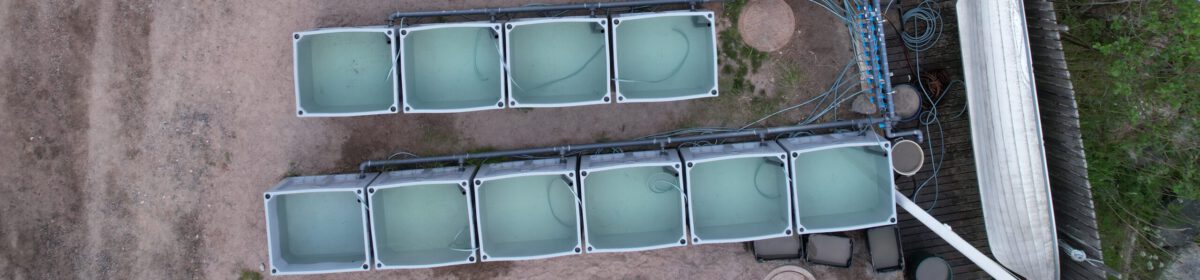
 This is a joint research infrastructure funding for Turku higher education institutions from the Research Council of Finland. The NEMESIS research infrastructure collects environmental and maritime safety data throughout the Archipelago Sea region. A collaboration between three higher education institutions, NEMESIS enables research on environmental and security anomalies, as well as long-term monitoring of changes in marine areas. Lead and main applicant: Jarkko Paavola and Emil Nymann at the Turku University of Applied Sciences, Elina Kasvi at the University of Turku and Christian Pansch at Åbo Akademi University. It is a great opportunity to work closely together with the different partners to collect essential environmental data in the Archipelago Sea, one of the largest Archipelagos worldwide. We can now measure ‘marine weather’ and identify thermal microclimates, which play a key role in understanding the impacts of global warming on marine ecosystems.
2026 – 2029 – PhD project # Lauri Kuismanen within the doctoral programme of Biosciences, Environmental and Marine Biology at Åbo Akademi University: “Drivers of underwater biodiversity patterns and targeting mitigation actions in a morphometrically complex archipelago – Integrating extensive high-resolution data”
Main supervisor; co-supervisors: Matias Scheinin – Turku University of Applied Sciences, and Louise Forsblom – Finnish Environment Institute (Syke))
The research aims to determine (1) how environmental drivers shape marine species distributions
and community composition over time, and (2) how well biodiversity is accounted for in marine
monitoring, especially in morphometrically complex systems such as the Archipelago Sea.
2025 – 2028 – PhD project # Amalia Skrifvars within the doctoral programme of Biosciences, Environmental and Marine Biology at Åbo Akademi University: “Resilience of Arctic and Subarctic Phytoplankton to Rising Sea Surface Temperature”
Main supervisor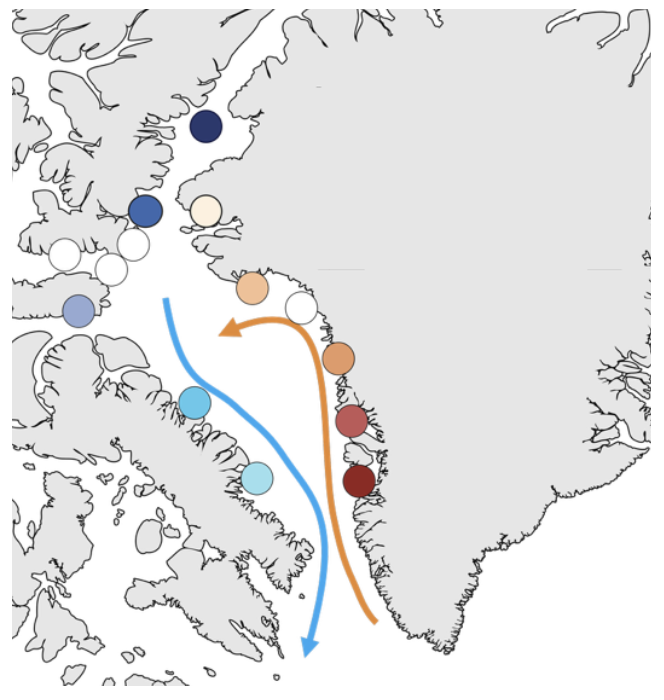
The project investigates how climate change affects phytoplankton in the Arctic. The research focuses on quantifying intraspecific diversity and species’ adaptability to warming and extreme light conditions. Through genetic analysis of Baffin Bay over time and space, population structures and distribution patterns are mapped. The aim is to investigate whether temperate genotypes can invade the Arctic and whether extreme temperature and light conditions in the Arctic affect their establishment ability. The project is expected to increase knowledge about phytoplankton’s adaptability to climate change and provide important information to climate models.
2024 – 2028 # Collaborator within Susanne Kortsch’s Academy fellowship that was funded by the Research Council of Finland for the project “Heatwave-driven rewiring of coastal food webs” at the University of Helsinki
Collaborator
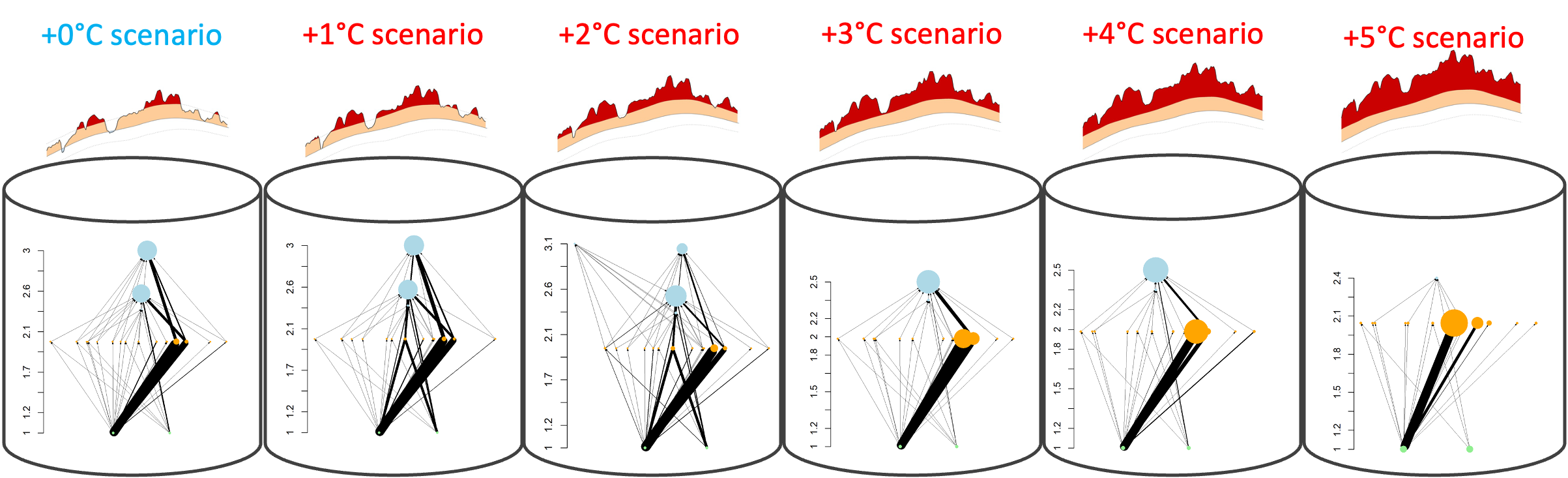
This project aims to predict how coastal ecosystems, and their food webs in particular, respond to marine heatwaves, an increasingly common consequence of climate change and one of the most pervasive threats to global marine biodiversity.
2024 – 2028 # SOS – Centre for Sustainable Ocean Science
 transdisciplinary and user-centric paradigm for identifying and analysing marine biodiversity-related wicked problems and their solutions that supports sustainability transitions. It enables ÅAU to be a world leader in transdisciplinary ocean science and a driver of UN’s Ocean Decade work.
2023 – 2027 – PhD project # Sarah Rühmkorff within the doctoral programme of Biosciences, Environmental and Marine Biology at Åbo Akademi University: “Resilience of Seagrass Ecosystems through Habitat Heterogeneity and Genetic Diversity”
Main supervisor and PI
Archipelagic highly dynamic environmental (temperature) gradients challenge organisms to adapt and survive, as they have to cope with rapid changes over multiple temporal scales. Importantly, it is unknown how the environmental background can shape the response of seagrass to heat stress and if seagrass living in high-variability environments (more stress), can adapt better towards heat stress than sheltered 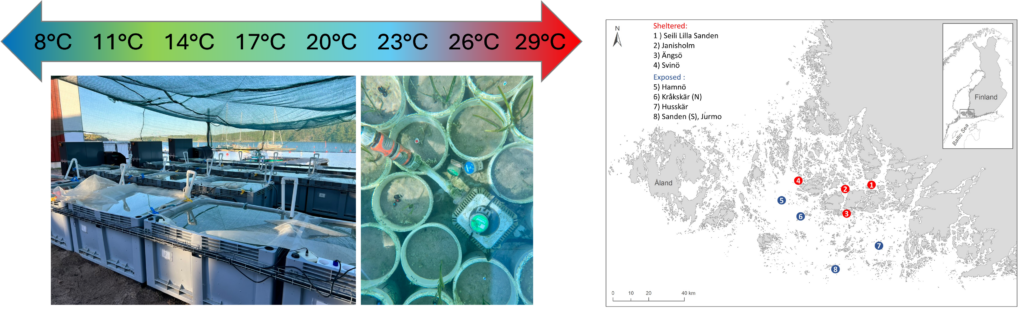 seagrass (environment more constant). The predominantly monospecific, but presumably phenotypically diverse seagrass meadows in the Archipelago Sea, therefore, provide an ideal model system to test this concept. Through the simulation of thermal gradients in mesocosm settings, this project (a) quantifies phenotypic traits of selected seagrass populations across and within seagrass clones, (b) assesses their potential for adaptation to environmental change on heat resistance, and (c) correlates population origin with heat tolerance and distinct ecological functions (e.g. nutrient uptake, sediment stabilisation).
2024 – 2028 # EU Horizon CL6-2023-Climate: SEA-Quester – Blue Carbon production, export, and sequestration in emerging polar ecosystems
WP-6: Effects of climate change and anthropogenic stressors, with A. Thörnroos-Remes & C. Boström
SEA-Quester is investigating marine carbon cycling in novel ecosystems in the polar seas that are emerging due to climate change. Melting sea ice, changing currents, and a warmer ocean are already changing species distribution, behaviour, and metabolism. How these will further impact marine biodiversity and ecosystem functions and services, like carbon sequestration, in the polar seas is poorly understood. However, this potentially has large consequences for meeting biodiversity and climate change mitigation targets.

SEA-Quester runs from 1 February 2024 to 31 January 2028, and is a collaboration between the following partners: Technical University of Denmark, DTU-Aqua (Denmark, Lead), University of Bremen (Germany), Greenland Climate Research Centre, Greenland Institute of Natural Resources (GINR, Greenland), Alfred-Wegener Institute, Helmholtz Centre for Polar & Marine Research (Germany), Leibniz-Institute for Baltic Sea Research (IOW, Germany), Åbo Akademi University (Finland), Institute of Oceanology, Polish Academy of Sciences (IOPAN), GRID-Arendal (Norway), Hereon Helmholtz-Zentrum (Germany), Imperial College London, and Aarhus University (Denmark).
2023 – 2028 # The Research Council of Norway (Forskningsrädet): NORSE – Biodiversity in Northern European Seagrass meadows – drivers, responses, and resilience; Lead and main applicant: Karine Gagnon Havforskningsinstituttet Bergen NO
WP lead and PI
–> Recently endorsed as a UN Decade of Ocean Science, IOC-UNESCO project
The NORSE project focuses on eelgrass meadows, which are important coastal ecosystems that are threatened by intensive human activity. Eelgrass (Zostera marina) meadows are found in shallow coastal waters across northern Europe and support many critical ecosystem services such as carbon storage, coastal protection, and high biodiversity from epiphytic algae to grazing inverterbrates to small fish to large commercially-important species such as cod and salmon. Seagrass meadows are in decline around the world, and eelgrass meadows in Northern Europe are threatened by many human activities, including eutrophication, overfishing, and climate change. The goal of the NORSE project is to understand the anthropogenic and environmental drivers of eelgrass-associated biodiversity in Northern Europe, through a combination of 
historical data analysis, field sampling, and mesocosm experiments across the Skagerrak-Kattegat-Baltic Sea region. NORSE focuses on invertebrate diversity in eelgrass meadows. Though small, these invertebrates play important roles in the eelgrass ecosystems. They are a critical link in the trophic network and essential in ensuring the health of eelgrass ecosystems, as they ensure good ecosystem functioning by controlling the overgrowth of filamentous algae caused by nutrient enrichment. In recent years, efforts have increased to improve the status of seagrass meadows around the world, with many conservation and restoration projects underway. NORSE will identify the critical drivers of eelgrass meadows and their biodiversity. These results will contribute to ensuring that eelgrass meadows can continue to thrive under future environmental conditions and for planning restoration and management actions that can revitalise degraded and lost eelgrass meadows across Northern Europe.
2021 – 2026 – PhD project # Lucinda Kraufvelin within the doctoral programme of Biosciences, Environmental and Marine Biology at Åbo Akademi University: “Impacts of marine heatwaves on the functioning of temperate coastal ecosystems under the influence of non-indigenous species”
Main supervisor and PI
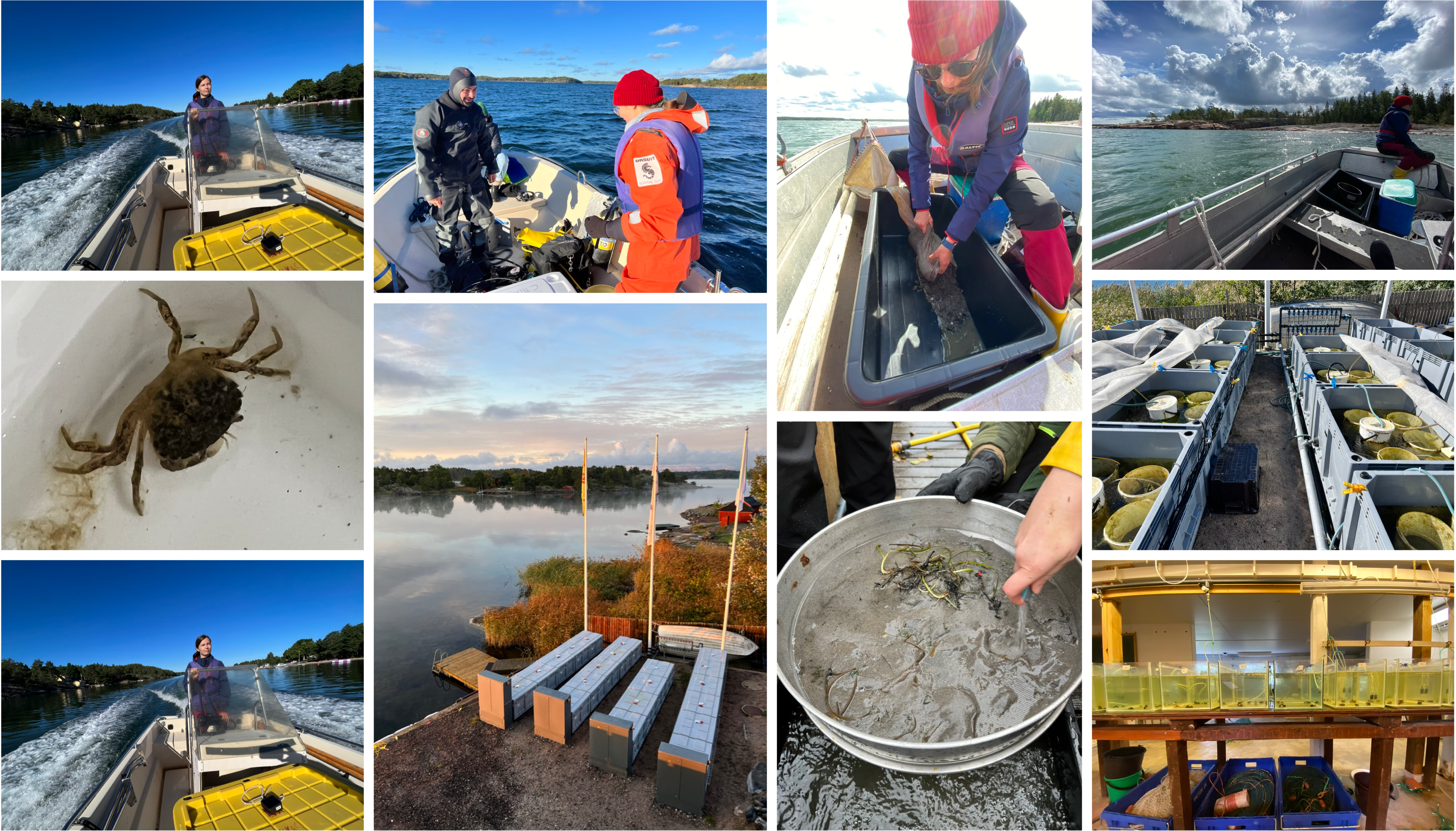
The objective of the proposed research is to (i) determine the effects of marine heatwaves on the functionality of critical temperate coastal ecosystems. Additionally, this research aims to (ii) examine the impact of marine heatwaves on selected non-indigenous species, as well as (iii) to determine whether responses of native species to marine heatwaves are affected by the presence of the chosen non-indigenous species, and (iv) to clarify if and how these responses may alter the functionality of a stressed system.
PREVIOUS (since 2019)
2021 – 2024 # BiodivERsA EU Call on Biodiversity and Climate Change: Pathogenic Vibrio bacteria in the current and future Baltic Sea waters: mitigating the problem (BaltVib)
WP lead and PI
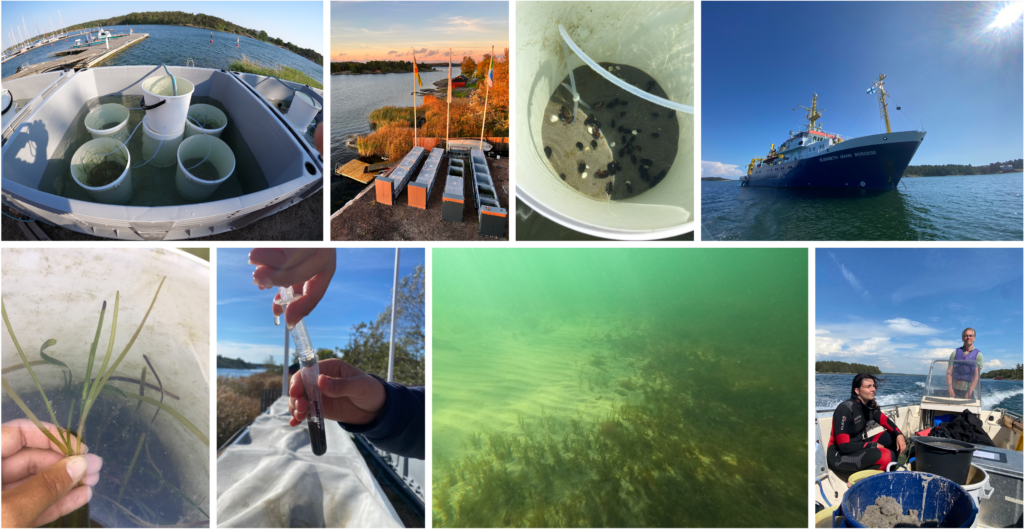
Vibrio – microbes that are part of the natural bacterioplankton in temperate marine waters – have in recent years flourished in the Baltic Sea, probably stimulated by elevated surface water temperatures. Several Vibrio species are human pathogens. It is hence of great concern that Vibrio-related wound infections and fatalities have increased dramatically along the Baltic coasts. Future climate change is predicted to escalate this problem, posing a significant threat to human health and the Baltic tourism industry. However, the projections do not yet take into account the influence of ‘ecosystem engineers’ such as mussels and macrophytes on Vibrio diversity and abundance. Recent data indicate that in some of the ‘ecosystem engineers’ habitats the abundance of pathogenic Vibrio spp. is reduced. This opens up the option for nature-based solution (NbS) strategies to control pathogenic vibrios in the nearshore habitat where humans interact with the sea. However, climate change will also affect the structure and functioning of the ecosystem engineers, with as yet unknown consequences for the Vibrio populations in the Baltic Sea. BaltVib aims to delineate the current and future Vibrio status, determine biotic and abiotic key factors regulating Vibrio prevalence, and identify NbSs to mitigate the problem. This will be accomplished through interdisciplinary integration of marine, microbiological, molecular and socio- ecological expertise carried by partners from seven Baltic nations.
2021 – 2022 # Svenska Kulturfonden: Marine heatwaves in the Archipelago Sea – from identification and measuring their impacts, to implementation of mitigation strategies
Main PI
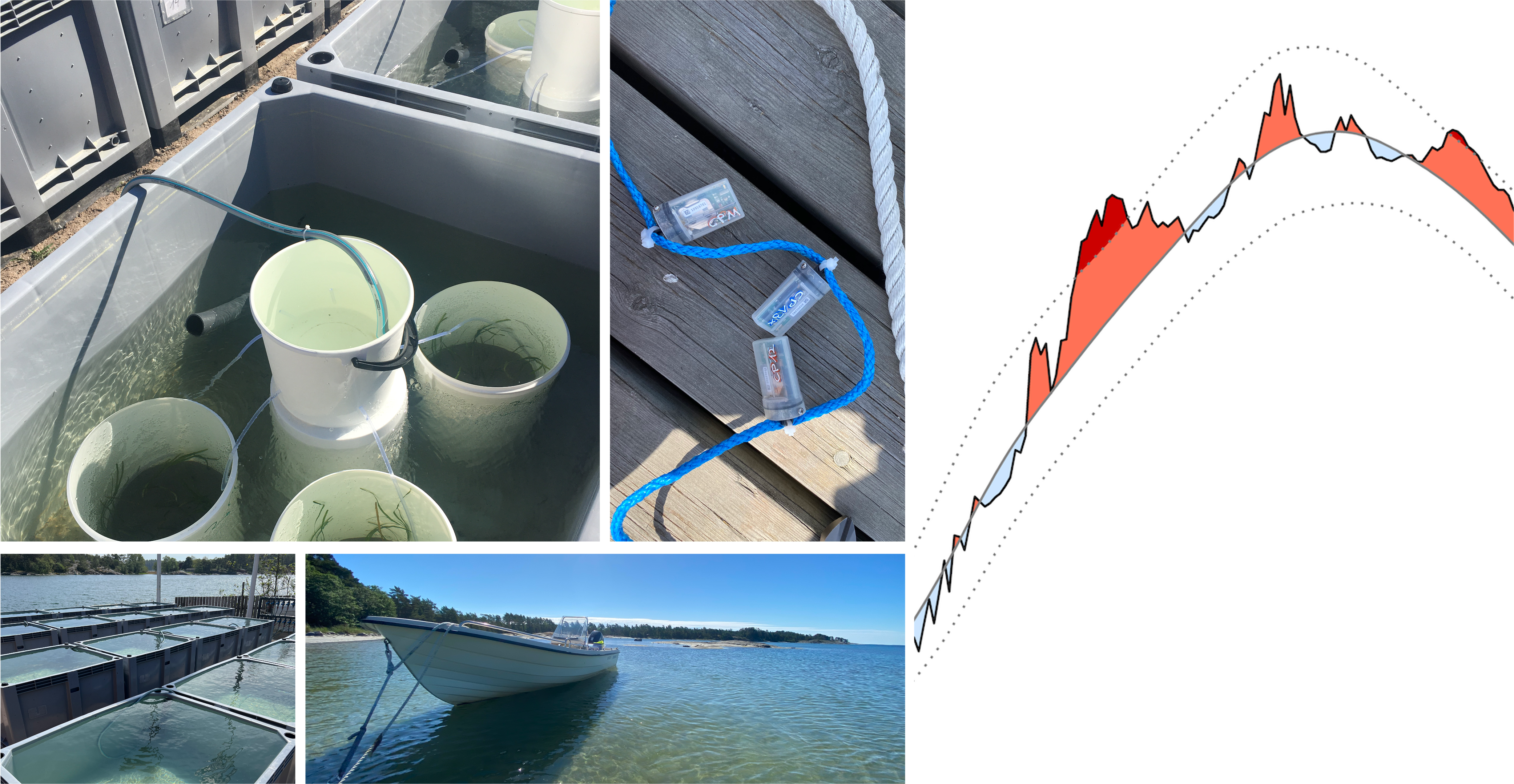
This project applies different approaches to serve the particular question: Can we – by local measures – mitigate the negative impacts from globally driven extreme events such as marine heatwaves in the Archipelago Sea? As one result of global warming, marine heatwaves are increasingly found worldwide, and their intensification if projected for the near future. Heat stress often drives species beyond their thermal limits with consequences for the individual performance, and a risk of loss of sensitive species and ecosystem collapse, while additional – often local – stress may exacerbate the negative impacts from marine heatwaves. By means of data modelling and experimental ecological research, we identified the occurrence of marine heatwaves in the Archipelago Sea and will now test their impacts on Archipelago Sea marine ecosystems in simulated mesocosm experiments. We will further classify and test the main local drivers that intensify the negative impact from heat stress in the Archipelago Sea. This will help developing mitigation strategies during the occurrence of these extremes, which might be temporal reductions in boat noise and wave emissions, reductions in micro- or macro-plastics, local eutrophication or temporal restrictions in identified key habitats. In combination with a monitoring and information system, indicating the occurrence of heatwaves to researchers and to society in public exhibitions and the web, this project will identify the potential of mitigating the negative impact from global extreme events by realistic and effective local measures.
2019 – 2022 – PhD project # Extreme Events in the Baltic Sea – Fabian Wolf DBU Fellowship

Main supervisor and PI
Extreme events like heatwaves and hypoxic upwelling events are projected to occur more often in the future. This project aims to understand the effect of these extreme events on typical Baltic Sea species communities. A 22-year long temperature dataset of the Kiel Fjord is used to analyze and model heatwaves and coldspells, so that the experimental treatments resemble naturally occuring extreme events.