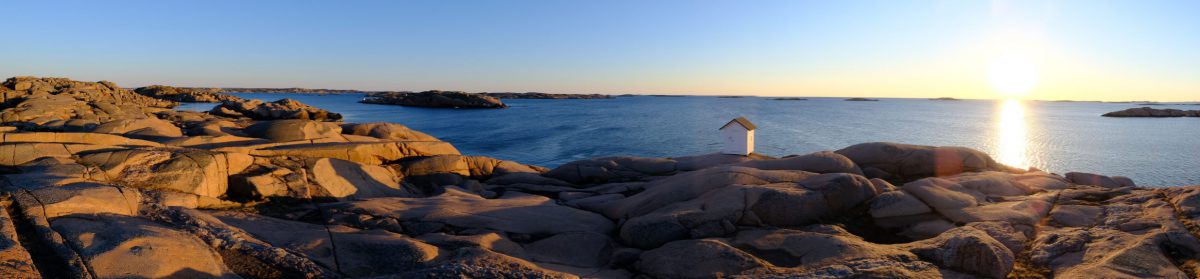
Four studies and a PhD thesis follow the Asian shore crab, Hemigrapsus takanoi, from its establishment in the Baltic Sea to the physiological limits that may determine how far it can spread.
Ola Nour, Meike Stumpp, Christian Pansch
The Baltic Sea has, in recent decades, become home to a growing number of non-indigenous species, and only few have drawn as much attention as the Asian shore crab, Hemigrapsus takanoi. In the region, this small but ecologically important crab competes with native species and preys heavily on mussel beds that structure much of the Baltic Sea’s hard-bottom communities. Understanding whether and how far such an invader can spread is a question we addressed by integrating population ecology and physiology.
Our work followed this question across three stages. We first characterised the population structure of an established Baltic population and examined how the crabs select prey by size among individuals of the blue mussel Mytilus edulis. We then turned to the crab’s early life stages, testing how larval development responds to the low salinities typical of the Baltic’s more brackish reaches. Finally, we combined salinity and temperature in a single framework to ask how freshening and warming, two of the Baltic Sea’s defining climate trends, might jointly constrain the crab’s further dispersal.
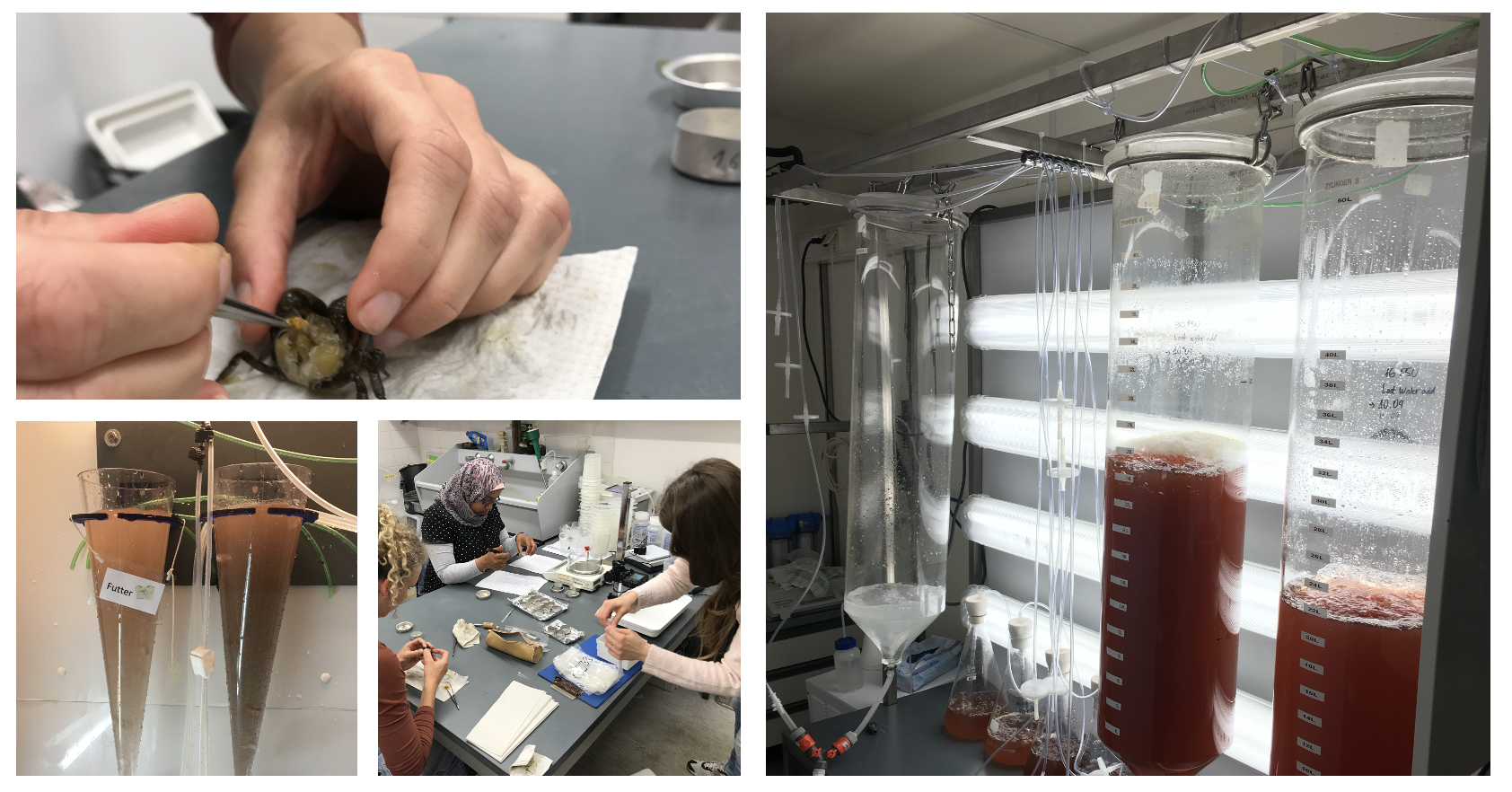
Across the three studies, a consistent picture emerges: Hemigrapsus takanoi is a capable and already well-established invader in the Baltic Sea’s more saline waters, but its larvae are measurably more sensitive to low salinity, and the combination of freshening and warming appears capable of restricting further dispersal into the lower-salinity Baltic Proper. In other words, the same environmental gradient that defines much of Baltic ecology may also ultimately limit this invasion. This combination of population-level and physiological evidence offers a template for anticipating, rather than simply documenting, future marine invasions as the Baltic’s salinity and temperature regimes continue to shift.
A separate, comparative study adds a further dimension to this picture. Working with Hemigrapsus takanoi and the native common sea star Asterias rubens together, since both prey heavily on the Baltic Sea’s blue mussel beds, we tested how each species performs under warming and under fluctuating versus constant temperature regimes. The results were strongly asymmetric: under a 4°C warming treatment, the crab’s energy uptake rose by more than 40%, while the sea star’s energy uptake collapsed by over 80% and its biomass declined, consistent with local summer temperatures already pushing past its thermal tolerance. Fluctuating temperatures added further limits to the sea star, which stopped feeding roughly ten days earlier than under constant warming, while the crab kept feeding through the warmest phase of each cycle. The comparison suggests that warming and increased thermal variability may give the invader a further advantage over at least one of its native competitors, in addition to the salinity constraints identified above.
This work is published in:
Nour, Ola Salah El Din Mohamed (2020) The non-native crab Hemigrapsus takanoi in the south-western Baltic Sea: Population structure and sensitivity to salinity and temperature shifts. Open Access (PhD/ Doctoral thesis), Christian-Albrechts-Universität zu Kiel, Kiel, Germany, 162 pp.
Nour OM, Pansch C, Stumpp M (2022) Freshening and warming may restrict dispersal of Hemigrapsus takanoi into the Baltic Proper due to interactive effects on larval survival and feeding. Marine Biology 169:125 (https://doi.org/10.1007/s00227-022-04112-0)
Nour OM, Pansch C, Lenz M, Wahl M, Clemmesen-Bockelmann C, Stumpp M (2021) Impaired larval development at low salinities could limit the spread of the non-native crab Hemigrapsus takanoi in the Baltic Sea. Aquatic Biology 30:85-99 (https://doi.org/10.3354/ab00743)
Nour OM, Stumpp M, Morón Lugo SC, Barboza FR, Pansch C (2020) Population structure of the recent invader Hemigrapsus takanoi and prey size selection on Baltic Sea mussels. Aquatic Invasions 15:297-317 (https://doi.org/10.3391/ai.2020.15.2.06)
Morón Lugo SC, Baumeister M, Nour OM, Wolf F, Stumpp M, Pansch C (2020) Warming and temperature variability determine the performance of two invertebrate predators. Scientific Reports10:6780 (https://doi.org/10.1038/s41598-020-63679-0)